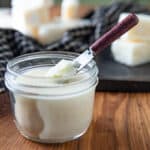
Beef Tallow
If you're a fan of traditional cooking techniques and natural, whole ingredients, beef tallow is a must-try ingredient for your kitchen. We'll guide you through making beef tallow step by step.
Servings 24 tablespoons
Calories 126kcal
Cost $3
Ingredients
- 3 pounds beef suet
Instructions
- Chop the suet into small pieces. To speed up melting, you can run partially frozen suet through your food processor or a meat grinder.
- Add it to a slow cooker or Dutch oven, if you'd like to do it on the stovetop.
- Set the slow cooker to low, or set the flame on the stove to the lowest temperature possible
- Once it is melted, the "cracklings" will begin to fry. Let the cracklings get very crispy if you want to use them.
- Line your fine mesh strainer with several layers of cheesecloth. You can substitute paper towel or a coffee filter.
- Ladle the hot fat through the strainer over a large bowl.
- Pour the tallow into wide-mouth canning jars, or make them into blocks. See the article above for the method.
Notes
How to store it
Store small quantities of tallow at room temperature for a month or so. Technically, it is shelf stable if stored in a root cellar or a cool basement. Store it in airtight containers or vacuum-packed.
For larger quantities, store it in the refrigerator for a couple of months.
Freeze for longer storage. It’s best if used within one year. Vacuum packing can extend this time if it is frozen.
How to use beef tallow
You can use it to replace any current oil, butter, or shortening that you are using.
- Perfect for searing meats before cooking, especially beef. Remember, it has a high smoke point, so you quickly get a beautiful sear.
- Makes delicious fried potatoes, French fries, and hash browns.
- Use it for deep frying too. It makes delicious fried chicken. (Pro tip: You can reuse the tallow that has been used for deep frying, strain out any impurities with cheesecloth. Then store it as suggested above.)
- Use it for pie crust to make savory pies, like; quiche and pot pies.
- Substitute butter in baked goods, like biscuits and savory muffins. They come out extra fluffy.
- Use it for roasting meats and vegetables. Just coat them with tallow and pop them in the oven. It will give the food a lovely caramelization.
- It’s terrific for sautéing onions to make beautifully caramelized onions.
- Spread it on toast or an English muffin. Be sparing. A little goes a long way.
- Traditionally, it was used for making soaps and candles.
Nutrition
Calories: 126kcal | Protein: 0.2g | Fat: 14g | Saturated Fat: 8g | Polyunsaturated Fat: 0.5g | Monounsaturated Fat: 5g | Cholesterol: 10mg | Sodium: 1mg | Potassium: 2mg | Calcium: 0.3mg | Iron: 0.02mg