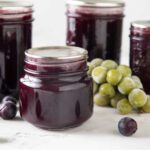
Grape Jelly
Few things can rival the joy of spreading homemade grape jelly on a warm slice of toast or using it as a delightful condiment for various dishes.
Servings 96 tablespoons
Calories 22kcal
Cost $6
Ingredients
- 3 cups grape juice
- 1 cup water
- 3 tablespoons low sugar pectin see recipe notes
- 2 cups Sugar
Instructions
- Prepare canning jars and lids by washing and heating them before starting the jelly. Get your canning pot on the stove.
- Wash the grapes well (organic grapes can have a whole host of creatures that call the cluster home). Remove each grape from the stem. Squeeze them into a large pot. Crush them with a potato masher or similar tool.
- Bring the grapes and a bit of water to boil. Reduce the heat and simmer for ten minutes with the pan covered.3 cups grape juice, 1 cup water
- Strain the pulp, skin, and seeds out using a jelly sock or a cheesecloth-lined strainer. Let it strain for a couple of hours.
- Pour the grape juice into a large pot. Add the pectin and stir constantly to incorporate it. Heat up the juice to boiling over high heat. Boil for one minute.3 tablespoons low sugar pectin
- Add the sugar. Bring the mixture back to a full rolling boil. (One that can’t be stirred down.) Boil for another full minute. Skim off foam, if needed.2 cups Sugar
- Ladle the hot jelly into hot jars leaving ¼ inch headspace. Remove bubbles if necessary.
- Wipe the rim of the jars clean with a damp paper towel to remove any debris.
- Center the lid on the jar. Screw on the bands fingertip tight.
- Process jars for 5 minutes, adjusting for altitude. After processing is complete, let jars rest in the hot water for at least 5 minutes so that they cool slowly. This will eliminate siphoning.
- Remove jars to the counter and leave undisturbed for 12-24 hours until fully cooled. Check seals.Store jars in a cool, dark place for at least one year.
Notes
Makes six half pints.
You can make a full-sugar version by substituting classic pectin and increasing the sugar to 5 cups.
Pro Tips
- Since the jelly is processed for less than 10 minutes, you should use sterilized jars.
- This recipe is fine for a water bath canner.
- Grape jelly is delicious on toast or a bagel with butter. It will transport you back to spring in the middle of winter.
- It makes an amazing peanut butter and jelly sandwich.
- Top a cracker or English muffin with some cream cheese and a dab of jelly.
- Use it as a condiment for your grazing platters. It’s especially good with soft cheeses like brie, camembert, goat cheese, or queso fresco.
- Use it as a filling for cookies, cakes, and cupcakes.
- Make a glaze for meats, such as pork or chicken.
- See more inspiration in the article above.
Nutrition
Serving: 1tablespoon | Calories: 22kcal | Carbohydrates: 6g | Protein: 0.03g | Fat: 0.03g | Saturated Fat: 0.002g | Polyunsaturated Fat: 0.002g | Sodium: 1mg | Potassium: 8mg | Fiber: 0.1g | Sugar: 5g | Vitamin A: 1IU | Vitamin C: 0.01mg | Calcium: 1mg | Iron: 0.03mg