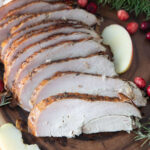
Smoked Turkey
This smoked turkey recipe is the ultimate in Thanksgiving food or just a summer party by the smoker—step-by-step instructions.
Servings 25 servings
Calories 65kcal
Cost $20
Equipment
Ingredients
- 1 turkey
- olive oil
- ` large carrot
- 1 Onion
- 2 stalk celery
- 1 small apples
For the dry rub
- 6 Tablespoons brown sugar
- 2 Tablespoons garlic powder
- 2 Tablespoons onion powder
- 2 Tablespoons chili powder
- 2 Tablespoons paprika
- 2 Tablespoons Cumin
- 2 Teaspoon rosemary
- 2 Teaspoon thyme
- 2 Teaspoon sage
- 1 Teaspoon salt
- ½ Teaspoon black pepper
- 2 Teaspoons dried parsley
Instructions
- Add the rest of the brine ingredients, and then add the turkey. Cover it with water if needed.1 turkey
- Dry it inside and outside with paper towels.
- Drizzle it with olive oil or melted butter and rub it all around.olive oil
- Mix the dry rub ingredients in a small bowl. Season it well with the dry rub, rubbing it into the meat.6 Tablespoons brown sugar, 2 Tablespoons garlic powder, 2 Tablespoons onion powder, 2 Tablespoons chili powder, 2 Tablespoons paprika, 2 Tablespoons Cumin, 2 Teaspoon rosemary, 2 Teaspoon thyme, 2 Teaspoon sage, 1 Teaspoon salt, ½ Teaspoon black pepper, 2 Teaspoons dried parsley
- Fill the cavity with the roughly chopped vegetables.` large carrot, 1 Onion, 2 stalk celery, 1 small apples
- Don’t forget to season the inside of the cavity.
- Set up your smoker with wood and a container of water. Get the smoker going to a temperature of 225°F/115°C. Place turkey breast directly on the smoker racks. Smoke for 2-3 hours until the internal temperature reaches 165°F/80°C in the thickest part of the breast.
- Remove the bird from the smoker. Tent it with aluminum foil. Let it rest for at least 5 minutes.
Notes
What wood to use
We prefer apple wood with this recipe. It compliments to apple juice in the brine. You could also use cherry wood. Hickory and more intense woods will overpower the turkey, so stay clear of those.
How to store leftovers
- Cool Down: Allow the smoked turkey to cool to room temperature. Do not leave it out for more than two hours to prevent bacterial growth.
- Slice or Shred: If you have a large amount, consider slicing or shredding the turkey. This makes it easier to store and use later.
- Airtight Containers: Place the turkey in an airtight container. If you don’t have containers, you can use heavy-duty aluminum foil, plastic wrap, or resealable plastic bags. If using bags, try to squeeze out as much air as possible before sealing.
- Refrigeration: Store the turkey in the refrigerator if you plan to use it within three to four days. Ensure your fridge is at or below 40°F (4°C) to keep the turkey safe.
- Freezing for Longer Storage: For longer storage, freeze the turkey. It can be kept in the freezer for up to four months without significant loss of quality. When freezing, label the containers or bags with the date, so you know how long it’s been stored.
- Thawing and Reheating: When you’re ready to eat the frozen turkey, thaw it in the refrigerator, not at room temperature. To reheat, ensure it reaches an internal temperature of 165°F (74°C) to kill any bacteria.
- Avoid Repeated Reheating: Reheat only the amount of turkey you plan to use. Repeated reheating can dry out the meat and increase the risk of foodborne illness.
Nutrition
Calories: 65kcal | Carbohydrates: 6g | Protein: 6g | Fat: 2g | Saturated Fat: 1g | Polyunsaturated Fat: 1g | Monounsaturated Fat: 1g | Cholesterol: 19mg | Sodium: 127mg | Potassium: 141mg | Fiber: 1g | Sugar: 4g | Vitamin A: 485IU | Vitamin C: 1mg | Calcium: 21mg | Iron: 1mg