
Fermenting Peppers
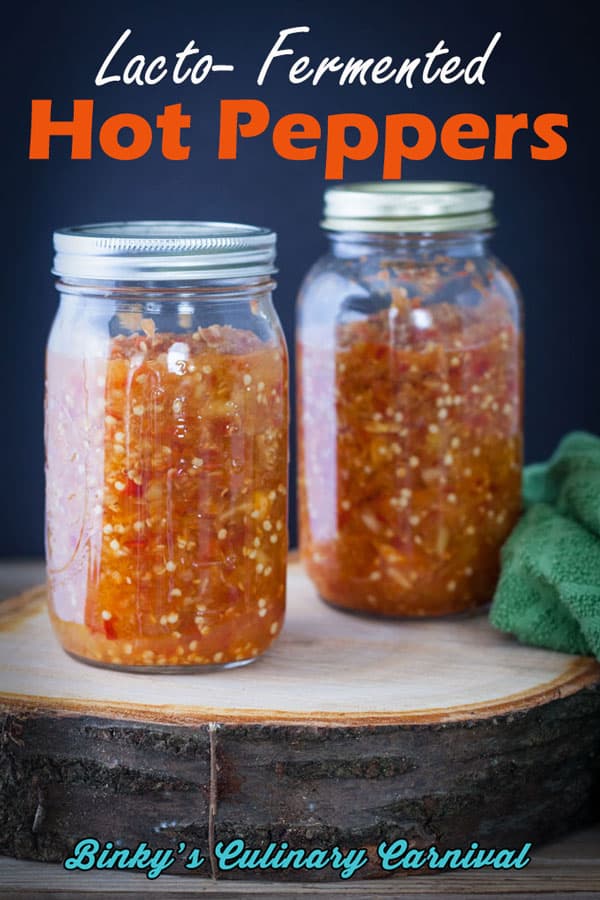
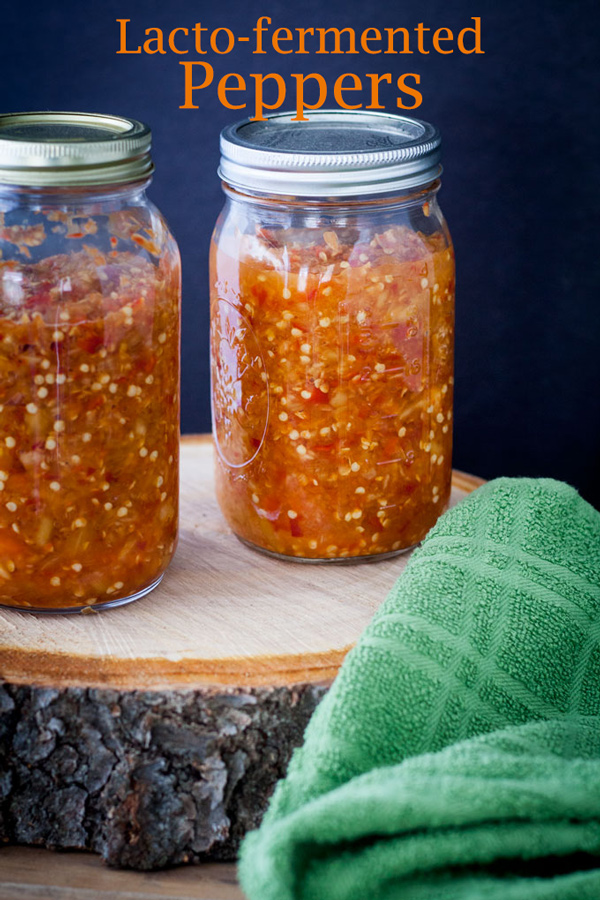
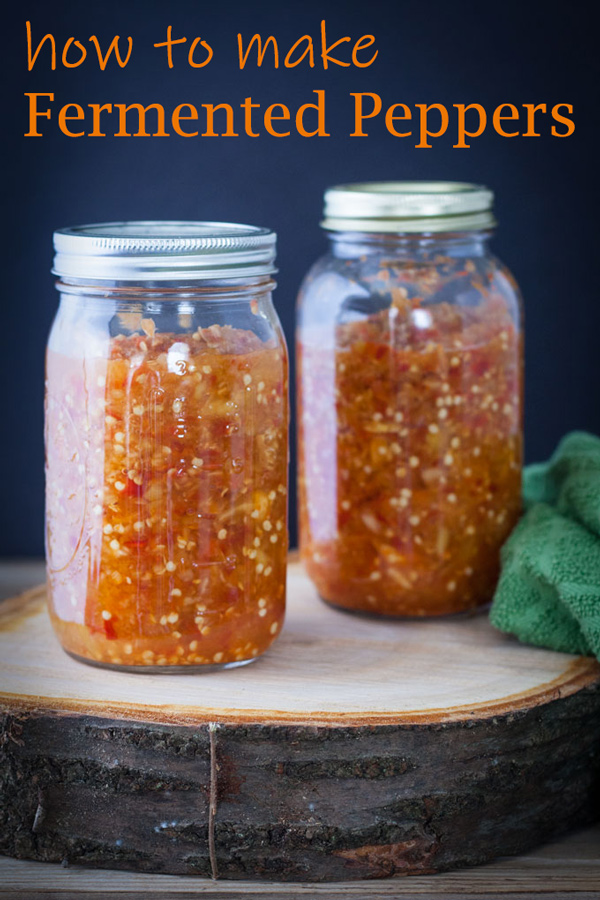
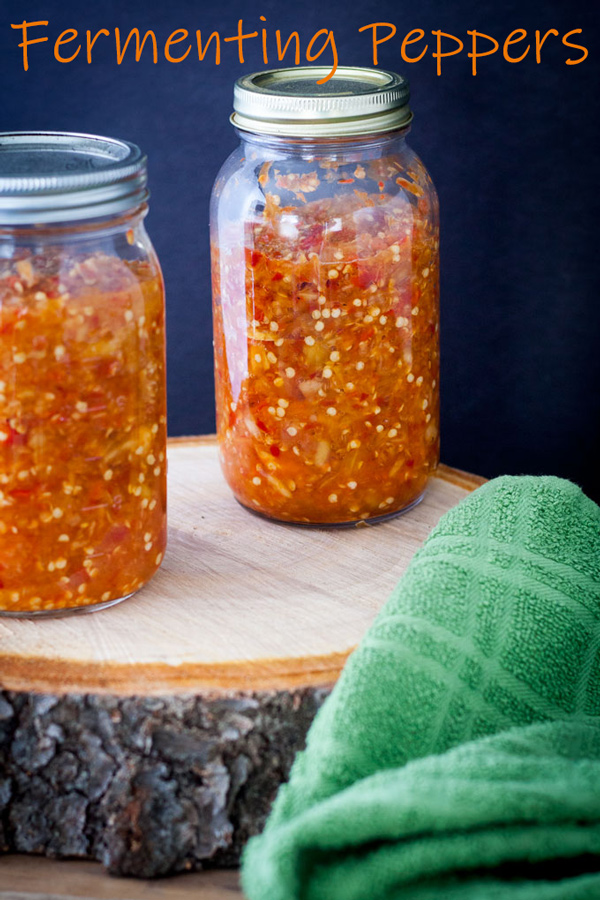
Fermenting peppers is not a difficult process! It is quite easy, but patience is required! Fermenting peppers is an essential step in making hot sauce.
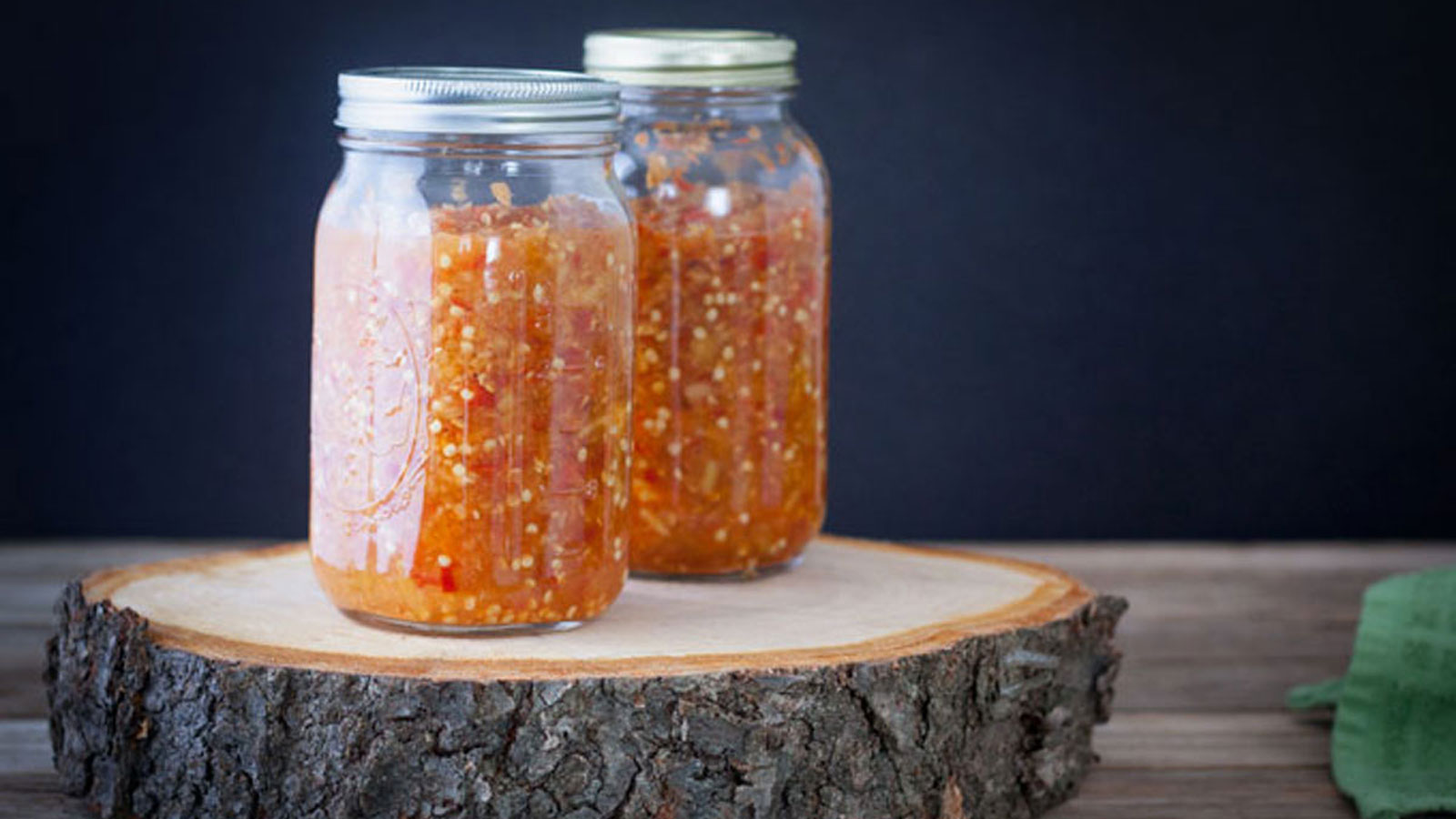
Can you make hot sauce with fresh peppers? Yes, technically, you can! Is the hot sauce sooo much better when you ferment the peppers? Absolutely, it is! The fermentation process gives the hot sauce a more complex flavor. Check out my article for Fermented Hot Sauce.
How Can You Use Fermented Peppers?
The best use for Fermented Peppers is making your own hot sauce at home! You won’t have to buy the stuff at the grocery store! Hot sauces were traditionally made with only three ingredients, pepper mash, salt and distilled vinegar. Other flavors can be used when making hot sauces though, garlic, onion, herbs, cilantro, cumin, and others can be used to the hot sauces different flavor profiles.
Many of our favorite hot sauces, in the United States are still made with fermented peppers, including Sriracha and Tabasco. Fermenting the peppers gives the hot sauce a greater dimension of flavors!
History of Lacto-Fermenting
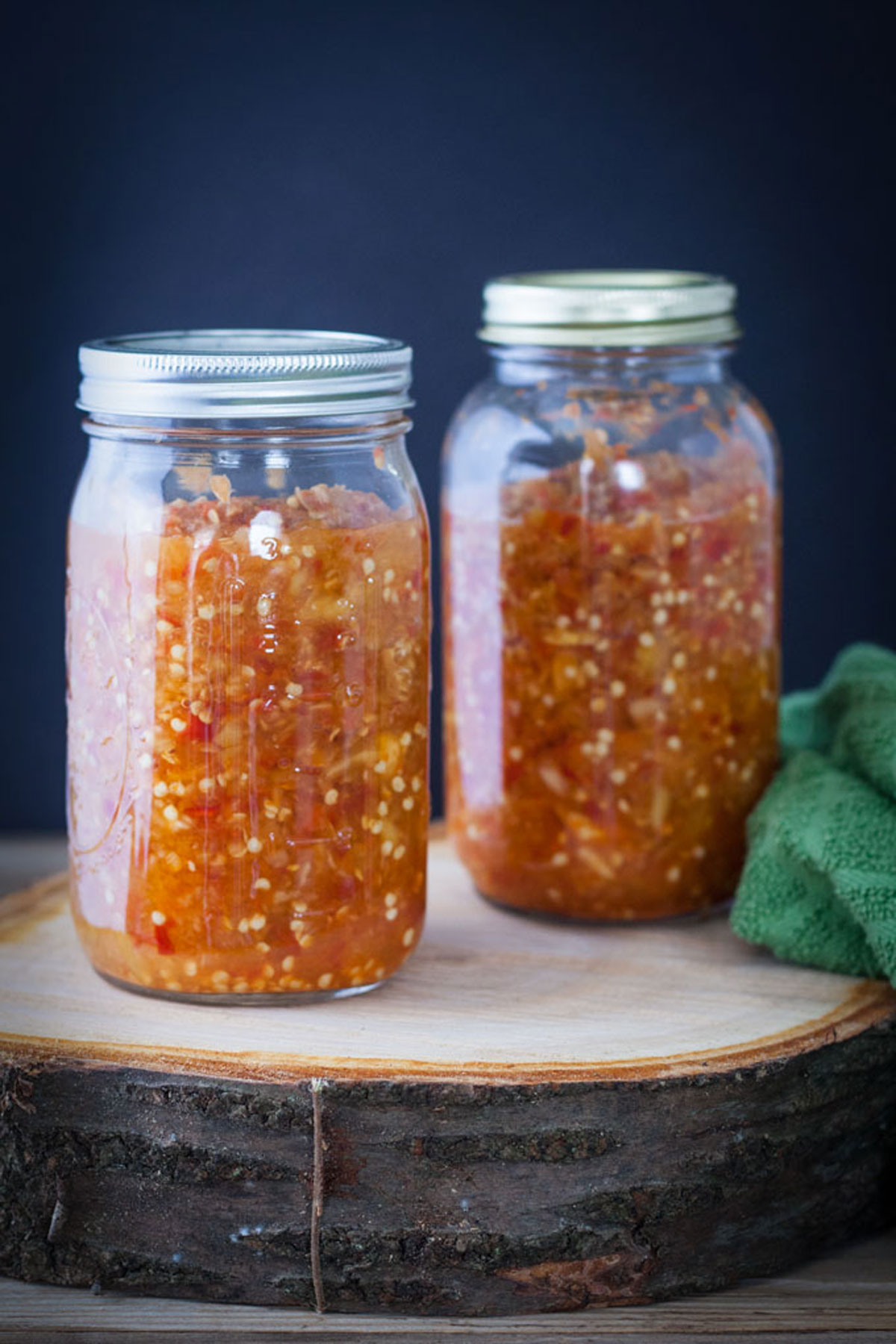
Fermenting peppers with a salt brine allows the peppers to ferment in their own juices. This intensifies the flavor of your finished product! This method has been employed, by humans for thousands of years!
Lacto fermentation was used to preserve vegetables that would otherwise spoil. These vegetables sustained families through barren months out the year.
Fermentation was traditionally done in large crocks, so that larger quantities of fresh produce could be preserved. This technique was used for kimchis, pickles and sauerkraut.
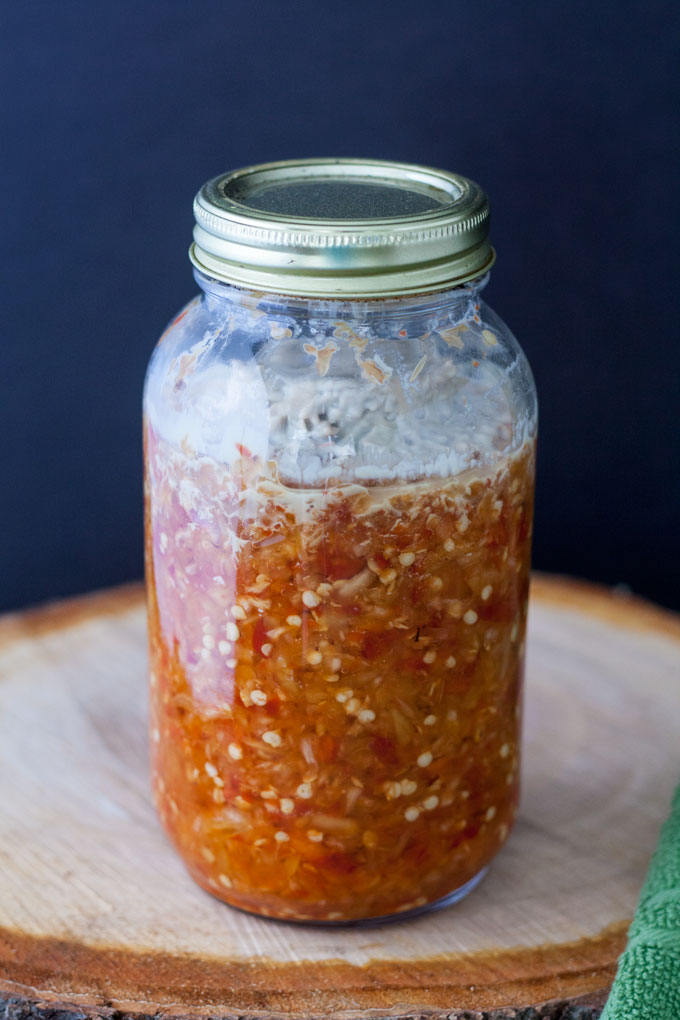
I include the above photo, so that you know, if the top has mold growing on on it, throw out that batch. It is not safe to eat! This one was contaminated because I over filled it with peppers and when I went to burp it the first week, they started to overflow, so, I had to scoop some of them out.
This mold is not the same as kahm yeast, which can form on the top when all of the natural sugars in the peppers have been used up. Kahm yeast is a thin, usually stringy layer which is white or cream colored and usually grows in a very thin layer. Molds can be black, pink, white or brown. They usually start in small spots and can grow quite thick.
I did not sterilize the spoon first. Learn from my mistakes!
What types of chilis to use
A pepper mash is made with a mixture different chilis. Many chili peppers will work well for fermenting, including;
- jalapeno
- serrano
- hot banana peppers
- Hungarian wax peppers
- habanero
Ingredients you need
- a mixture of hot peppers
- salt
Fermenting Peppers
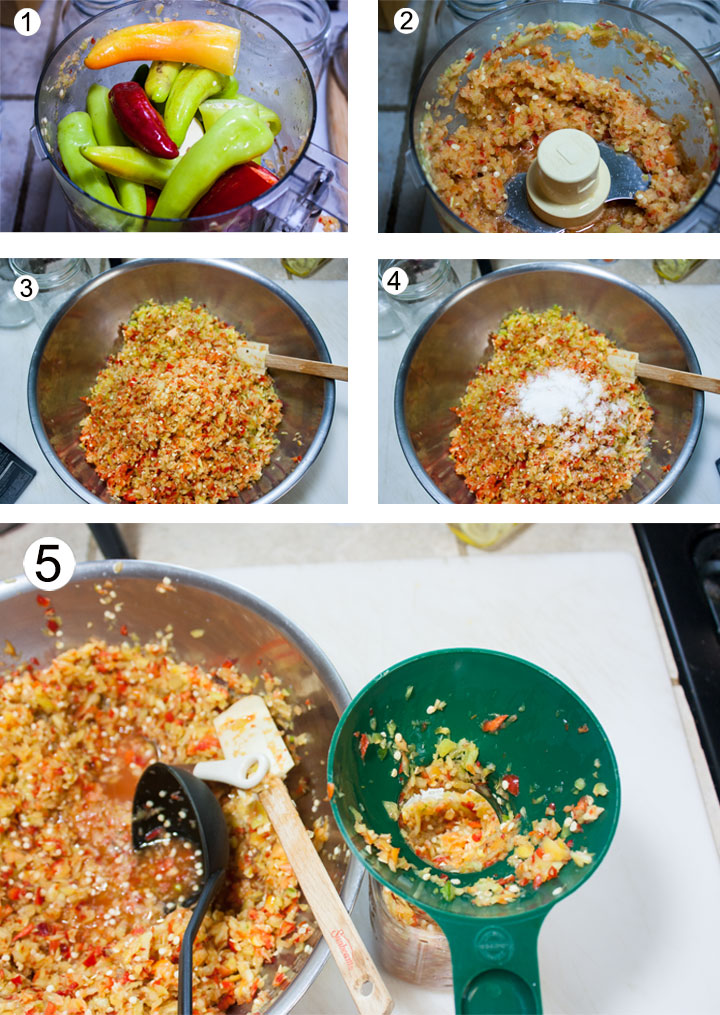
- Wash peppers. Remove stems. Place in food processor or blender container.
- Finely grind.
- Place in large bowl.
- Add salt. About 3 tablespoons per quart of peppers. Mix very well.
- Pack peppers and salt into a quart or a half gallon mason jar. Pushing down to remove air pockets.
The fermentation process takes at least one month. I left mine for 4 months. Technically, the peppers can ferment for years, in large vats, as Tabasco does. The longer the peppers ferment, the more intense the taste is and the more acidic it becomes, due to the effect of the good bacteria that are breaking them down.
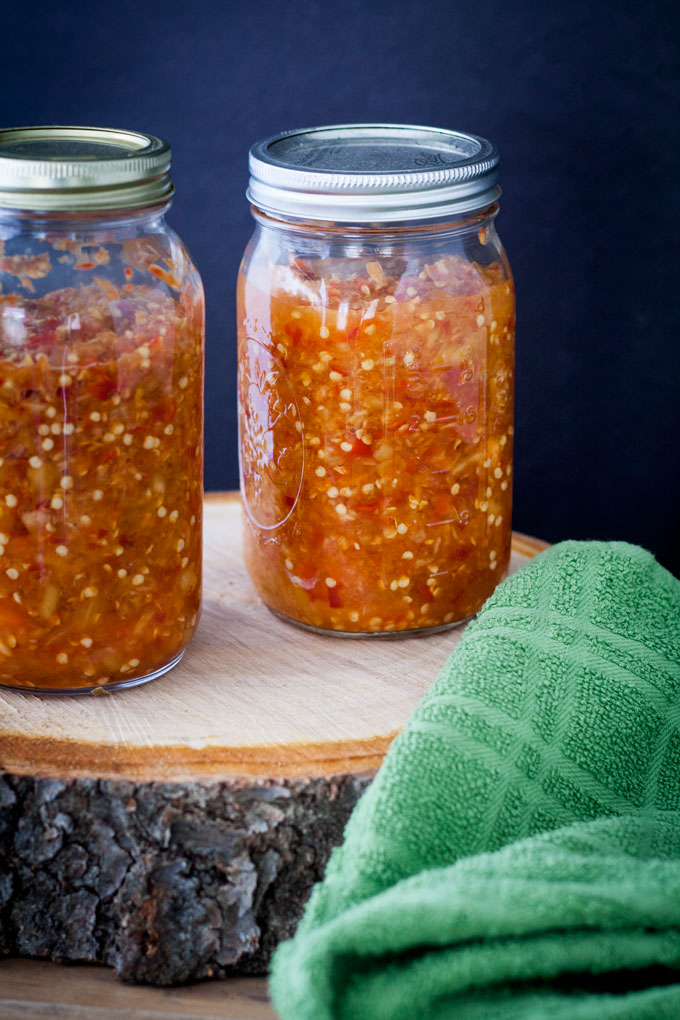
That is how easy it is to ferment your own peppers so that you can make your own hot sauce!
Due to my background in horticulture, I had several readers request a tutorial on Vegetable Gardening. So if you have interest in the subject, these posts are packed full of information about how to get that big harvest by the end of the season! Don’t miss my How to Start a Garden Series! The first part is Planning Your Garden!
Second is Preparing the Garden Site.
The third is Choosing Plants and Planting Your Garden.
The fourth is Garden Maintenance, and the last is Harvesting a Garden and Preserving the Harvest, this post has over 100 FREE recipes for preserving your harvest!
Don’t forget to sign up to my newsletter, so that you don’t miss any new recipes! Only 1 email per week, on Fridays! Sign up form is below!
Tools I Use
Contains affiliate links, for full disclosure, see FTC Disclosure, here.
Connect with us through our social media pages! Facebook, Instagram, Pinterest, Twitter.
Please ask any questions or share your comments in the comments section below. We’d love to hear from you.
I hope you enjoyed the recipe today.
Enjoy. And have fun cooking!

Fermenting Hot Peppers
Ingredients
- hot peppers, any variety will work See post for more information
- 3 Tbsp salt, per quart of peppers.
Instructions
- Remove stem from peppers.
- Grind in food processor.
- Mix 3 tablespoons salt per quart of peppers. Mix well. The salt will draw water out of the peppers and they will ferment in their own juices. Alternately, you can mix 1 quart of unchlorinated water with 3 tablespoons of sea salt, per quart.
- Sterilize jars. Pack in jars with peppers, pushing down contents to remove air. Leave 2 inches headspace.
- If using the brine method, cover peppers in jars with the water and salt mixture to cover. It is important the the peppers stay below the surface of the brine.
- Ferment in cool place for 1 to 4 months, up to years. For the first 2-3 weeks, burp jars daily, thereafter burp once per week.
- Use fermented peppers for making hot sauce.


 See all of my favorite tools and gift ideas on my New Amazon Store!Check out Binky’s Amazon Store!
Video
Notes
- Trust your nose. If they smell rotten or sour, the batch is bad. Discard.
- If a pink or white fungus appears on top, the ferment has gone bad. Discard.










I haven’t honestly used frozen. You could use habaneros but I’m not sure about freezing them first.
Have you tried fermenting in fido jars? It eliminates the worry over mold because the environment inside the jar is anarobic.
I haven’t yet but plan to invest soon. Have you used them?
I tried this. Ended up with 11/2 jars after one month. serannos. One jar has fungus with cottony mycellia, the other jar has what I think is yeast.–not cottony. Questions
1. If I boil the peppers awhhile are they safe to eat?
2. What does burp mean?
3. How does one release air?
4. How can I prevent fungus?
Many thanks,
MalcolmJohnson
Martindale, Texas
Hey Malcolm! The cottony jar, should be discarded. They are not safe to eat. Burp means releasing the air. To release the air, loosen the cap and lid, the air will release. Try to be careful not to contaminate the contents. Preventing the fungus is a matter of sterilizing jars and tools well. It could also be from the peppers themselves. Make sure to process only fresh peppers, with no visible signs of decay. I had a batch go bad this year too. It’s always good to make several jars, if you have enough peppers, so that you will end up with some good jars at the end. Sometimes it can’t be avoided. Good luck!
Easy and tastes great. I was wondering how you could tell it was mold and not the Kahm yeast that sometimes occurs if you don’t have enough head space? (you had mentioned you overfilled it) Thanks for the great info and making it easy to get into fermenting!
It was actually growing like mold, so I knew it wasn’t Kahm yeast. Thanks for the comment, Valerie! I’m so glad you liked them! Are you going to make hot sauce with them?